Clean, firm power: the “holy grail” of energy.
At Kembara, we are huge fans of renewables; the cost down and scaling of solar and batteries over the last decade is having a transformative effect on power markets, with Spain providing a great example of how the deployment of cheap renewables can deliver low-cost power for homes and businesses.
However, renewables growth causes new challenges for energy systems as grid operators and project developers must manage intermittent supply and the impacts of climate change itself, with extreme weather disrupting availability from both fossil and nuclear power plants.
To fully decarbonise our energy systems, analysis by the Energy Transitions Commission (ETC) shows that we need new solutions, particularly in wind-belt countries like the UK, as renewables penetrations rise above 70%.
We backed Reverion because the company has developed a fully dispatchable renewable energy system that addresses this challenge. It is cost effective and already working in the field. The chairman of the ETC described the Reverion technology as “magic”, and we tend to agree.
Spun out of The Technical University of Munich (TUM), Reverion has leveraged decades of R&D put into solid oxide electrochemical cell technology to create an ultra-efficient and reversible gas-to-power system that is modular, dispatchable and captures its own CO₂. Their products can use a variety of gas inputs (natural gas, biogas, syngas, hydrogen) to generate power at unprecedented efficiency and run in reverse to generate e-methane. This is a unique capability in the world.
Reverion’s first product, a 100 kW system, has already broken the world record for power generation efficiency, achieving a validated 74.2% in the field. This makes it the most efficient power plant of any type ever created. The next generation is a 500 kW unit targeting power generation efficiency of over 80%. This will put it around 15% higher than competing solid oxide fuel cell or closed cycle gas generation technologies.
The Reverion technology isn’t just efficient, it’s also clean. Carbon capture is integrated into the system, producing a pure stream of CO₂ ready for transportation and storage. So even on fossil gas, Reverion systems can be zero emissions, while using renewable fuel like biogas takes them into negative emission territory as a BECCS (Bioenergy with Carbon Capture and Storage). The first deployments of the technology are in that bioenergy application, harnessing sustainable biogas from anaerobic digestion systems. Once the resulting CO₂ is transported to a permanent store, creating a carbon removal, the system is generating power with negative emissions. Reverion has secured a $41M BECCS offtake agreement with marketplace Frontier to scale these carbon removals.
The final string to Reverion’s bow is its ability to run reversibly. Systems can flip between power generation mode and electrolytic clean gas generation in less than a minute. Where CO₂ is available (biogas is typically 50% CO₂) the Reverion system can convert that carbon into e-methane fuel. When matched to clean power from the grid, this creates a renewable clean gas that can be used for power, transport or industry. In countries with high renewables, like Germany, reversibility allows Reverion units to arbitrage cheap solar power during the day in summer with high price power demand in evening and winter. This produces a 100% capacity factor renewable energy asset that pays back its capital in only a couple of years – unit economics that have driven the company’s $2bn order book.
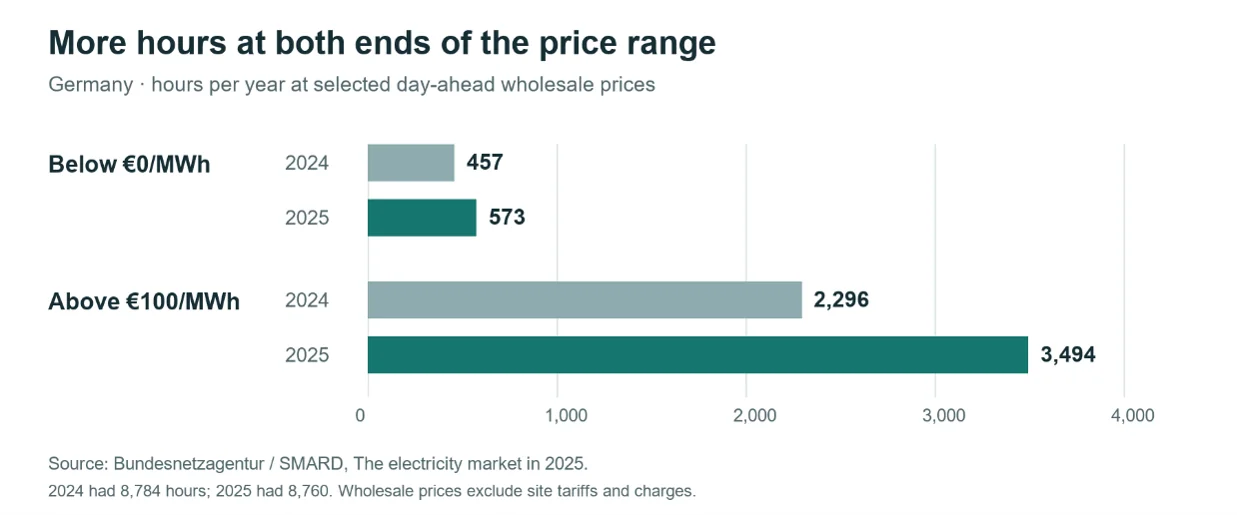
The market signal is already visible. Germany recorded 573 hours of negative day-ahead wholesale electricity prices in 2025, up from 457 in 2024. In the same year, prices exceeded €100/MWh for 3,494 hours, compared with 2,296 a year earlier. These figures illustrate the value of flexibility: as power price distribution becomes increasingly separated into a bi-modal dumbbell, the ability to arbitrage becomes more and more attractive, while offering valuable flexibility to national power and gas grids.
In addition to its amazing value proposition for customers, at scale the Reverion technology can address the key sovereign energy challenge for countries wanting to decarbonise: the seasonal flexibility that the ETC analysis identifies. There is already a large asset base of biogas-to-power combustion plant in countries like Germany, which has over 6 GW installed. Repowering these assets with Reverion’s reversible electrochemical solution doubles that power capacity and also provides the capacity to shift TWhs of summer solar energy to winter by using existing grid-connected gas storage, i.e. at zero marginal storage cost. The Reverion team refer to this as the death of the Dunkelflaute, a solution to the problem of providing power over periods in winter with both low sunshine and wind.
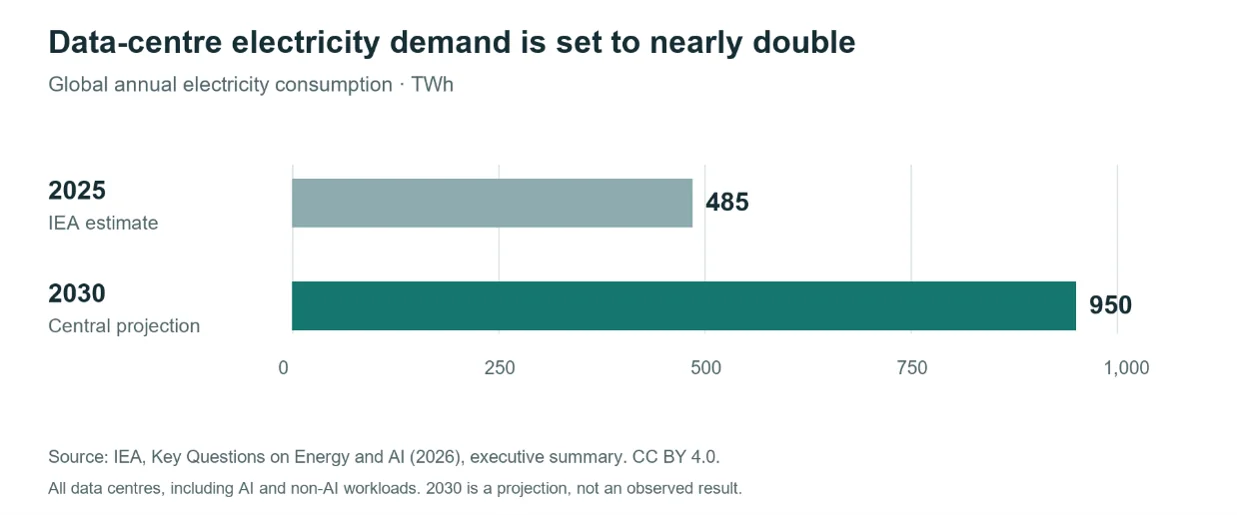
With units already in the field and technology risk retired, Reverion is poised to scale its offering, and this is the main purpose of the Series B, which we were excited to lead. The $175m raise funds the company to scale its capacity from 10s of MW today to 250 MW in 2029 by construction of a first Megafactory in Germany. This provides a significant economic and employment opportunity as well as compelling financial returns and will leverage the engineering and manufacturing capabilities and infrastructure in the country. The factory is underwritten by the $2 billion pipeline, including substantial interest from data centre developers, whose power demand is predicted to double by 2030 but need to react to concerns about the environmental impact of their infrastructure.
With all this opportunity, there is a line of sight for the company to scale to multiple billions in revenue and become a clean energy champion for Europe. The Reverion case is a great example of why Kembara was set up: enabling Europe’s leading deep tech and climate companies to remain independent and become global leaders in key technology areas. We are delighted to be involved and are looking forward to an amazing journey with the company.